
14F-6, No. 79, Sec. 1, Xintai 5th Rd, Xizhi Dist., New Taipei City, 221432 Taiwan (R.O.C.)
Tel: 886-2-2698-3877
Fax: 886-2-2698-4089
email : [email protected]


This series will be discontinued on January 1, 2025, with product services continuing for 5 more years. The replacement model is the 7750 series.
MICROTEST 7703 is a Impulse Winding Tester that provides pulse voltage outputs ranging from 100V to 5000V. It utilizes damping attenuation waveforms generated by L/C resonance to analyze magnetic components for defects such as short circuits between coils or between layers of winding wire. This model is specifically designed for Inverter-Transformer products and supports high-frequency harmonic/noise analysis mode. By amplifying the waveform through high-frequency resonance, it can precisely detect insulation defects caused by high-voltage coil slot leakage. The tester also offers various comparison modes, including total area comparison, area difference comparison, corona count comparison, jitter count comparison, and waveform comparison.

HARM analysis
This function will zoom the wave and compare with the wave of golden sample to inspect if there is any corona on the coil.
Coil cross can be inspect by this precision zoom function.
HFLT analysis
The instrument will quantize a high frequency noise part into a value. If the value is higher than the setting, the instrument will shows “Fail”. Therefore, even the harmonic amplitude is not over setting, the instrument will shows” Fail” if the noise value is higher than setting. This parameter is to increase the ability of inspect coil cross.
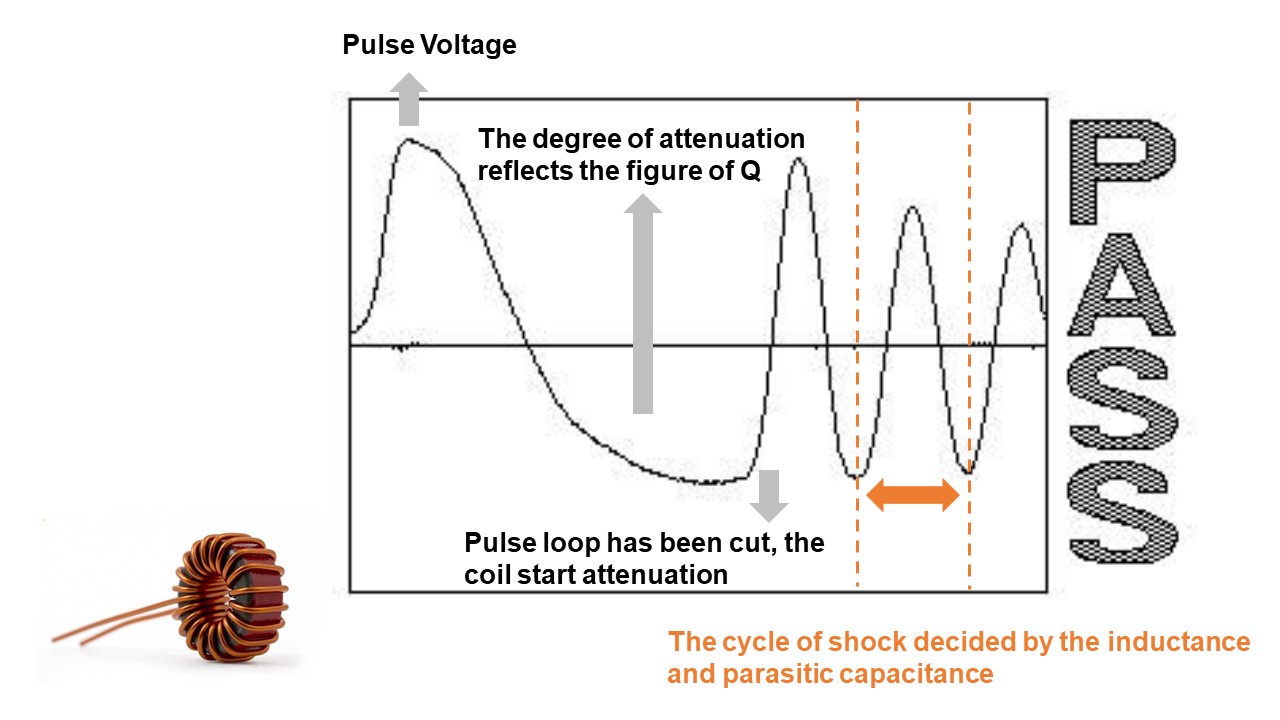
Introduction of Impulse Tester
Impulse Winding Tester use the comparison of pulse to measure the DUT. The instrument provide high voltage to do the instant pulse test and record the wave. Compare with the golden sample to define the product.
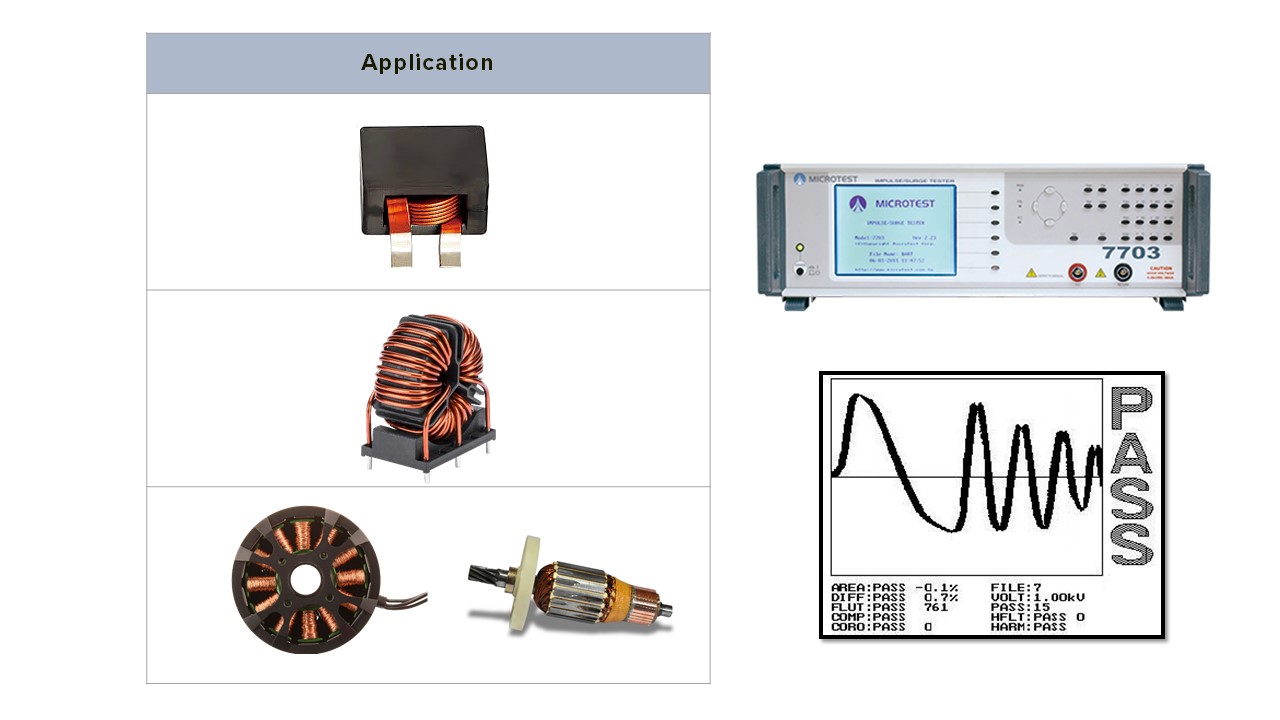
| Application | |
| Low inductance coil | |
| High power inductance | |
| Transformer | |
| Motor stator | |
| Motor rotor | |
| Winding component |
Why do we need impulse tester for producing motor/transformer?
Impulse Test = Quality and product life test
The small defection is hard to find at low voltage test station. As the DUT goes to the final assembly test, the defect may show up. This will higher the cost of production.
Motor and transformer usually work under high voltage. If we add impulse test in the product line, this may prevent the malfunction or burn on motor.
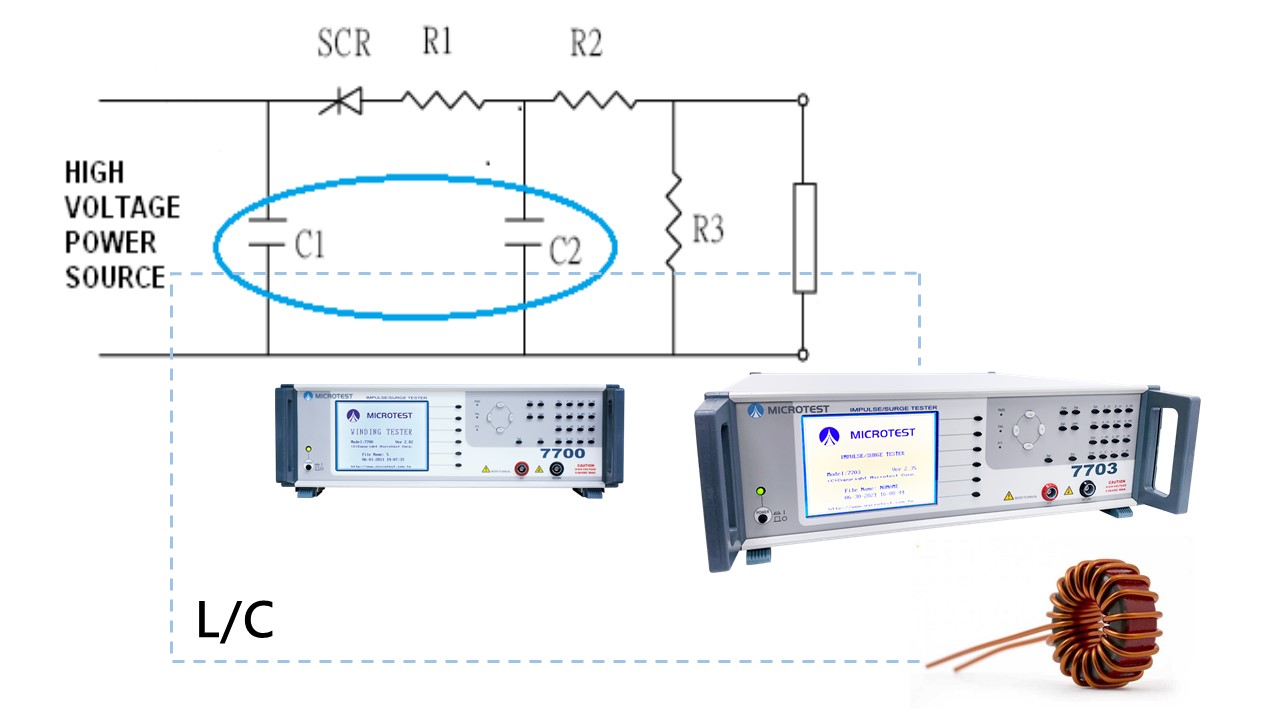
| L | is the DUT coil |
| C1, C2 | are the resonant capacitors in the instrument |
| R1, R2, R3 | is the resistant in the instrument and the DUT |
| Technology of Detect Layer Short | |
| → 1 | Charge the C1 capacitor to the certain testing voltage level. |
| → 2 | Trigger the SCR by pulse |
| → 3 | DUT will resonate with C1 and C2 |
Technology of Detect Layer Short
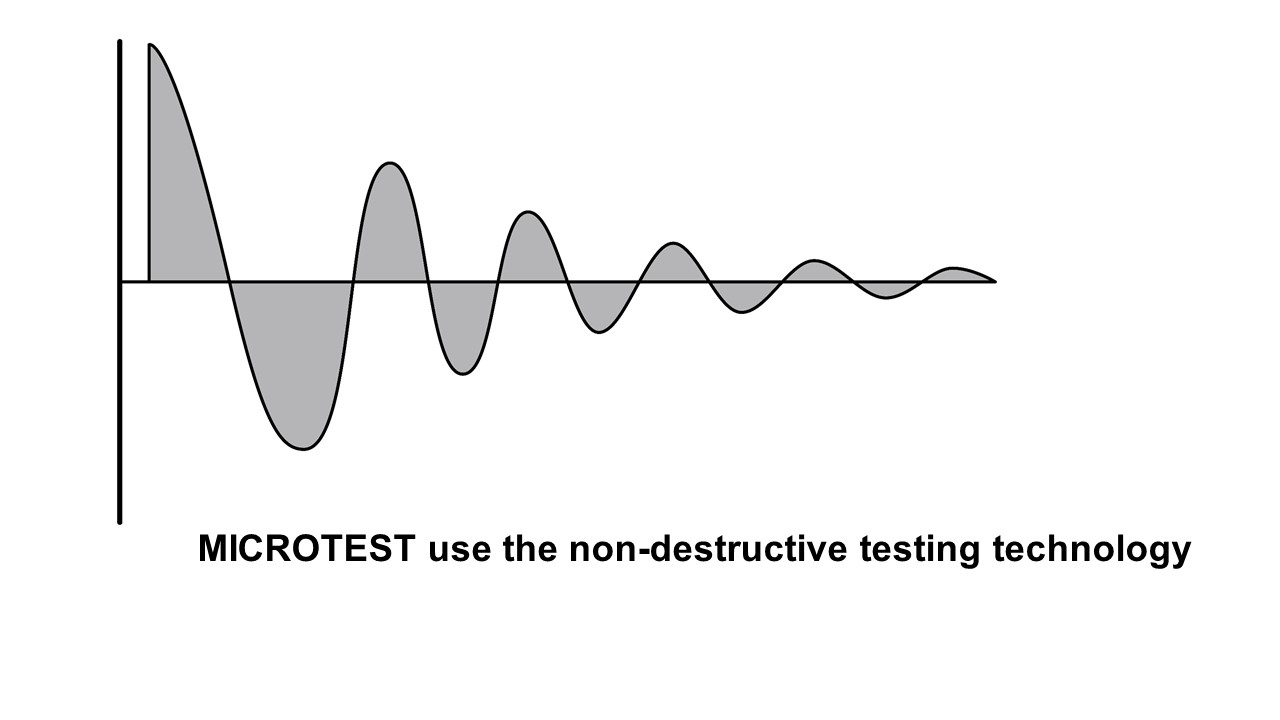
“Pulse voltage and waveform comparison” is the way we detect layer short. The pulse voltage is non-destructive/instant voltage that apply on both side of winding and detect the DUT without damage it. By compare the wave with the golden sample, we can judge the DUT.
Damping wave under L/C resonate comes from the feature change of defect coil.
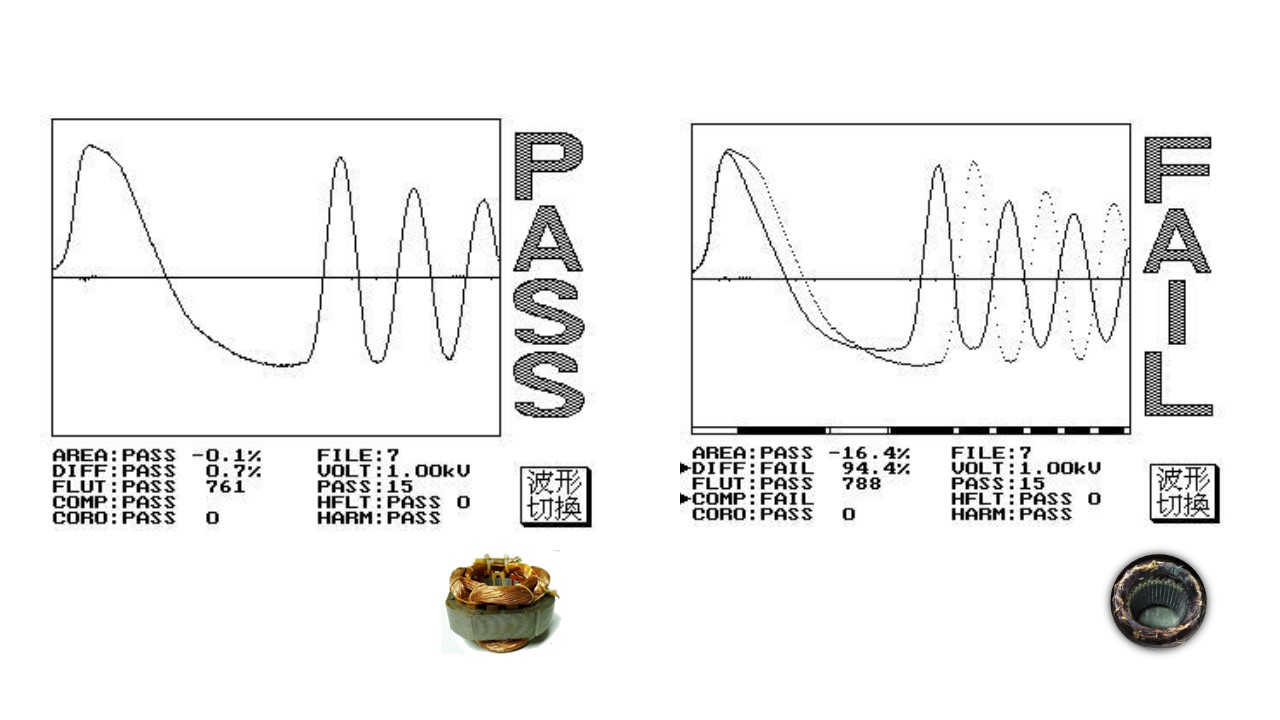
By comparing the wave of damping attenuation between golden sample and DUT
Provides 5 waveform comparison



